Publication date: 12 September 2024
Publisher: Murdoch Books
Pages: 470
Genre: Non-Fiction – Food
Format read: Paperback
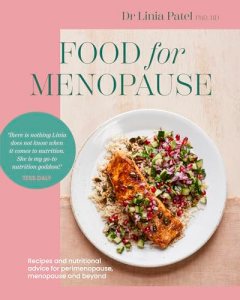
A practical food-based guide to managing menopause symptoms – from perimenopause and beyond – through simple and delicious recipes
Food for Menopause by Dr Linia Patel is packed with 80 super tasty, appealing recipes – perfect for busy lives.
You might already know a bit about menopause symptoms or you might believe it’s something to think about some time in the future. But studies show that there’s lots you can do from your thirties to make your menopausal years easier.
Dr Linia Patel’s friendly, authoritative cookbook explains how to make your menopause work for you by setting out the impact of nutrition on the body. It’s about mastering your mid-life body by knowing exactly what to put on your plate. For example, why do you get brain fog, hot flushes or mood swings, which nutrients should you be getting more of to combat these, and what recipes can you make to pack in more of those nutrients? There’s so much you can factor into your diet to see you through perimenopause, menopause and beyond and crucially to enable you to THRIVE, not just survive.
Part 1: Understanding your body and your symptoms
Part 2: Eating for success
Part 3: Living for success
Part 4: Recipes for success – breakfast, lunch, snacks, dinner, weekend meals, sides and extras, sweet treats and drinks.
Rating: ★★★
My thoughts:
I’ve found myself reading and researching menopause as much as I can recently in the lead up to my surgery, trying to prioritise my health and wellbeing. In picking up this book I wanted to take a look at what I can do to make this transition as easy as possible from a nutritional point of view.
Part 1: Food for Menopause contained valuable, up-to-date information surrounding menopause and the changes that come with this time of life in a simple, easy to read format without the politics of women’s health history found in so many other books I have read on this topic. There wasn’t any information that I hadn’t encountered before so I could treat it as a brief refresher before the ‘good stuff’ .
Part 2: Outlining four key nutritional principles, the author’s focus was on sharing how to nourish your body to enable your hormones to work for you, not against you. The author’s approach is centred around optimising hormonal balance and symptom management through healthy eating. This is the ‘good stuff’ and the part of the book where I did most of my note-taking.
Part 3: Having covered the nutritional principles in the previous part, the author discussed the other three pillars of wellness – sleep, movement and stress management – taking a holistic view of menopausal health. Again there wasn’t any new information here.
Part 4: The final part of the book contained the recipes, each with a blurb by the author and a tip or two for changing up the ingredients. Unfortunately, this is the part where I felt let down. I had hopes of trying new meals and being able to place this book on my kitchen shelves for returning to over and over, however, out of all of the recipes, there was maybe one or two that I might consider trying. For the most part I was completely uninspired by the recipes on offer.
Overall, this book was a very quick read, containing relevant nutritional information (which to be honest I could have found myself on the internet) and some ho-hum recipes that I will never make. Not a keeper, this will be a book that I donate to my local charity store with the hope that someone else will get more out of it than I did.
 Bookish Me